
March 8, 2026
With St. Louis experiencing hot and humid summers alongside chilly winters, having the right HVAC system makes a world of difference. Two high-efficiency systems on the market right now are geothermal and air-source heat pumps. As a homeowner, it’s important to understand the differences between these two systems so that you can make a better-informed purchasing decision.
What Are Heat Pumps?
Before we dive into the differences between the two, let’s first discuss what heat pumps are. Both of these systems transfer heat rather than generate it by burning fuel. They use a substance called refrigerant alongside a compressor that works to extract heat from one location and move it to another.
During the wintertime, a heat pump will pull thermal energy from either the air or the ground and deliver it inside your house. During the summer months, these systems will absorb heat from the air inside your home and release it to the outdoors. In general, heat pumps can deliver between two and five units of heating or cooling for every unit of electricity used. This means their efficiency sits between 200% and 500%.
Air-Source Heat Pumps
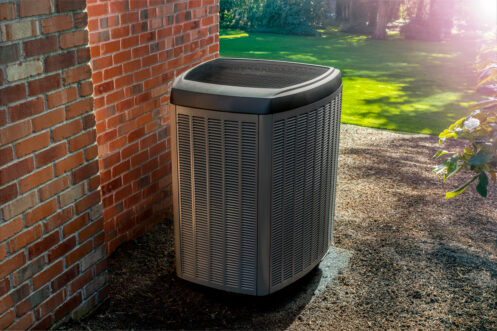
Air-source heat pumps are commonly referred to as just standard heat pumps. These can be used with traditional ducting or in a ductless mini-split system. These heat pumps work by transferring heat solely through the air. They use an outdoor condenser unit, one or more indoor air handler units, and refrigerant to circulate heat either in or out of your home.
Air-source heat pumps are the most popular type of heat pump on the market today. This is because they require very minimal installation. Many times, you can simply retrofit a new heat pump to use your existing ductwork. If you don’t have ductwork, you can get a mini-split system that doesn’t require any invasive installation.
In general, ducted air-source heat pumps last about 10 to 15 years, while ductless mini-splits last about 15 to 20 years. Because St. Louis has fairly humid summers and mild winter conditions, standard heat pumps are a great, reliable option. However, it’s important to note that standard heat pumps don’t operate efficiently at temperatures below freezing.
On the odd chance of colder snaps hitting below freezing temperatures, your heat pump can struggle to keep your home warm. Nowadays, there are cold-climate air-source heat pumps that you can purchase. These work efficiently down to temperatures of -20 degrees Fahrenheit. However, they do come at a premium cost compared to standard heat pumps.
Geothermal Heat Pumps
Geothermal heat pumps are also referred to as ground-source heat pumps. Unlike air-source heat pumps, these systems transfer heat between the soil and the air in your home. They work because the underground temperature stays relatively stable throughout the entire year. This allows geothermal systems to maintain a higher efficiency regardless of weather conditions.
Geothermal systems are comprised of the heat pump inside your home, a heat distribution system like your ducting, and an underground loop field. This loop field can be comprised of either horizontal trenches or vertical boreholes, depending on your specific layout. This underground loop field requires an invasive excavation process.
One thing to keep in mind when it comes to geothermal systems is that they don’t work for every property. If you have limited yard space or very challenging soil, you may not be able to install the ground field loops. However, properties that have enough space to accommodate the loop field can take advantage of the higher efficiency that geothermal systems have to offer.
Generally, geothermal heat pump systems have a longer lifespan than air-source heat pumps. The internal heat pump components inside your home typically last about 20 to 25 years. With proper care and upkeep, your underground loop system can last 50 years or more if properly installed.
Efficiency Comparison
When trying to determine whether an air-source or geothermal heat pump is the right choice for your home, you want to consider their operating efficiency. The more efficient your HVAC system is, the less energy it consumes. This translates to lower utility bills for you throughout the entire year.
In general, air-source heat pumps have about 200% to 350% efficiency. This means that for every unit of energy input, they can output about two to three and a half units of heat. This operating efficiency only holds true at temperatures above freezing. Anytime the outside temperature drops below freezing, the efficiency of your heat pump will drop significantly. In fact, most systems will have auxiliary heating that includes a heating element powered by electricity. This can sharply increase your heating bills during the winter months.
On the other hand, geothermal systems are able to leverage the stable ground temperatures throughout the entire year. This leads to a better operating efficiency of 350% to 500%. There’s no doubt that geothermal heat pumps perform more efficiently throughout all the seasons of the year than air-source heat pumps.
Because operating costs are directly related to the system’s operating efficiency, geothermal systems are cheaper to run. It’s estimated that homeowners can reduce their energy bills between 30% and 60% with a geothermal heat pump compared to a traditional HVAC system. The savings are significantly more when it comes to a geothermal heat pump.
Price Comparison
When comparing the cost of air-source heat pumps to geothermal heat pumps, air-source heat pumps will be the cheapest every time. This is simply due to the fact that they don’t require extensive equipment or invasive installation. Geothermal systems cost significantly more to install due to the ground excavation required as well as all the materials for the loop field system.
One thing to keep in mind with respect to pricing is that there are various incentives on the federal, state, and local levels that can help to mitigate the upfront costs of purchasing a new system. In general, both heat pumps qualify for a federal tax credit under the Inflation Reduction Act of 2022. Geothermal heat pumps are given a higher credit than standard air-source heat pumps. Many homeowners can claim a one-time utility credit on their energy bill when they show proof of a new system purchase.
Which Is Right for Your Home?
Determining whether an air-source or geothermal heating system is right for your home really depends on numerous factors. One of the most influential will be your property and space requirements for a geothermal system. If you don’t have adequate yard space to accommodate the horizontal loops or drilling access for vertical boreholes, you may not be able to install a geothermal system.
Another thing you’ll want to consider is your budget. Geothermal systems come at a higher upfront cost due to the amount of excavation work needed. While they can offer a lower lifetime cost, some consumers simply can’t afford the higher purchase price. In such cases, an air-source heat pump may be a better option if you’re looking for a more affordable HVAC solution.
However, homeowners who have access to funding to purchase a geothermal system and have a lot large enough to accommodate it can benefit from getting one. Geothermal systems offer better long-term energy savings and a longer lifespan than air-source options.
Reliable HVAC Installation Service
Scott-Lee Heating Company provides reliable HVAC installation service for the St. Louis and surrounding areas. We can also assist with all your HVAC replacement, repair, and tune-up needs. Call our office today to book your next service consultation.